Waking up with a sore jaw, headaches, or sensitive teeth can make every morning uncomfortable. Many people dismiss these symptoms as stress or poor sleep, but they may actually point to nighttime teeth grinding or a temporomandibular joint (TMJ) disorder. If you are searching for TMJ treatment Plainfield IL, understanding the cause of your symptoms is the first step toward lasting relief. Whether you live near Route 59, throughout Will County, or anywhere in the southwest Chicago suburbs, early diagnosis can prevent additional damage to your teeth and jaw.
Why Does My Jaw Hurt When I Wake Up? (Symptom Checker)
The Short Answer: Morning jaw pain often results from overnight teeth grinding, jaw muscle tension, or TMJ dysfunction. Identifying the underlying cause early helps reduce discomfort, protect teeth, and prevent worsening symptoms over time.
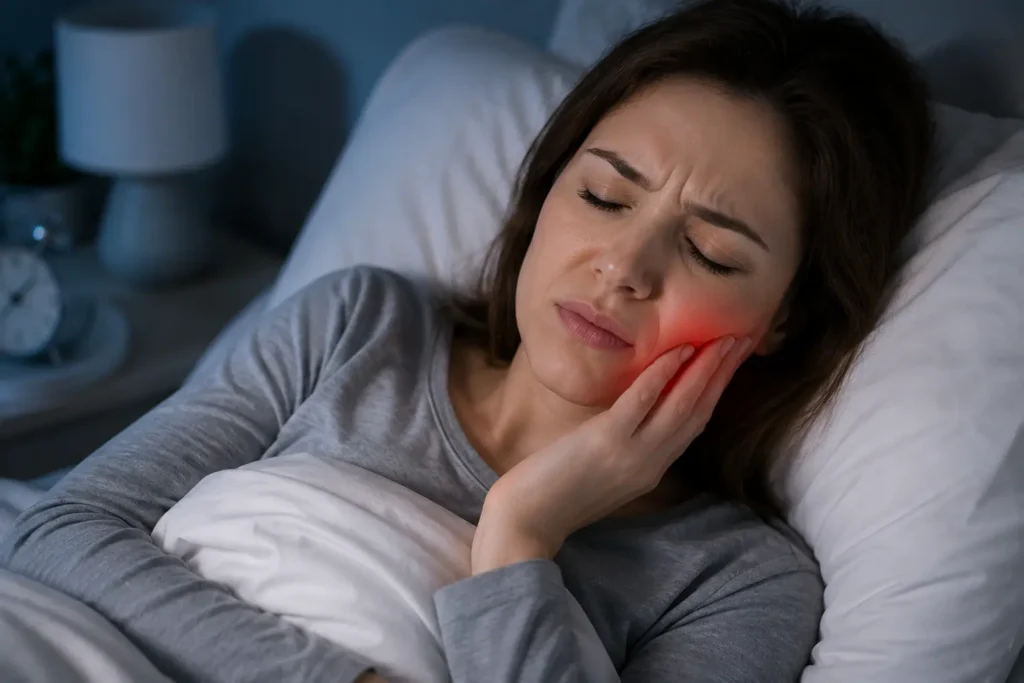
One of the most common causes of jaw pain in morning is unconscious clenching or grinding during sleep, a condition known as sleep bruxism. While you sleep, the jaw muscles can generate tremendous pressure, placing excessive stress on the jaw joints, surrounding muscles, and tooth enamel.
You may also notice:
- Jaw stiffness when waking up
- Clicking or popping sounds
- Morning headaches
- Facial muscle soreness
- Ear discomfort without infection
- Tooth sensitivity
- Difficulty opening your mouth fully
Stress, anxiety, bite misalignment, poor sleep quality, and certain medications may all contribute to nighttime jaw clenching. Because symptoms often develop gradually, many patients do not realize they have been grinding for months or even years.
Signs You Are Grinding Your Teeth at Night (Bruxism)
The Short Answer: Sleep bruxism commonly causes flattened teeth, worn enamel, morning headaches, jaw fatigue, and tooth sensitivity. Because grinding happens during sleep, family members often notice the grinding sounds before patients recognize the condition themselves.
Bruxism is far more common than many people realize. Since it occurs while sleeping, patients rarely know it is happening until symptoms appear.
Common warning signs include:
- Flattened or chipped teeth
- Cracked dental restorations
- Tight jaw muscles
- Frequent tension headaches
- Neck discomfort
- Tooth fractures
- Increased tooth sensitivity
- Interrupted sleep
If untreated, grinding can permanently damage teeth and overload the jaw joints. Fortunately, modern teeth grinding at night treatment focuses on protecting your bite while reducing stress placed on the jaw.
What Is TMJ Disorder?
The Short Answer: TMJ disorder affects the jaw joints and surrounding muscles, leading to pain, stiffness, clicking, limited movement, and headaches. Many patients experience both TMJ dysfunction and nighttime teeth grinding together.
The temporomandibular joints connect your lower jaw to your skull and allow you to speak, chew, yawn, and smile comfortably. When these joints become inflamed or overloaded, TMJ disorder can develop.
Common symptoms include:
- Jaw clicking
- Locking jaw
- Pain while chewing
- Facial tenderness
- Ear pain
- Headaches
- Limited jaw movement
TMJ disorders can result from chronic grinding, bite problems, arthritis, previous injuries, or prolonged muscle tension. A comprehensive dental evaluation helps determine the specific cause before recommending treatment.
How a Custom Night Guard Protects Your Teeth and Jaw
The Short Answer: A professionally fabricated custom night guard cushions your bite, reduces excessive grinding forces, protects enamel, and helps relieve jaw strain far more effectively than store-bought mouthguards.
A custom night guard is one of the most effective conservative treatments for sleep bruxism and TMJ-related discomfort. Unlike generic boil-and-bite products, custom appliances are fabricated from detailed impressions or digital scans of your teeth for a comfortable and precise fit.
| Feature | Custom Night Guard | Store-Bought Mouthguard |
|---|---|---|
| Fit Precision | Individually customized | Generic fit |
| Jaw Alignment | Professionally designed | Minimal guidance |
| Material Durability | High-quality dental materials | Softer materials wear faster |
| Enamel Protection | Excellent long-term protection | Limited protection |
Although many patients ask about custom night guard cost Plainfield, the investment often helps prevent expensive restorative procedures caused by cracked teeth, worn enamel, and broken dental work.
TMJ Treatment Options in Plainfield
The Short Answer: Successful TMJ treatment begins with an accurate diagnosis. Depending on the cause, treatment may include custom night guards, bite adjustments, muscle relaxation techniques, restorative dentistry, or referrals for multidisciplinary care.
Every patient deserves a personalized treatment plan because no two TMJ cases are exactly alike.
Your dentist may recommend:
- Comprehensive bite evaluation
- Digital imaging
- Custom night guard therapy
- Monitoring tooth wear
- Restorative treatment for damaged teeth
- Stress reduction strategies
- Jaw stretching exercises
- Referral when medical evaluation is appropriate
Patients throughout Plainfield appreciate receiving advanced care close to home without traveling into downtown Chicago. Convenient access from Route 59 and surrounding Will County communities makes ongoing follow-up visits simple and convenient.
Frequently Asked Questions About Jaw Pain and Teeth Grinding
The Short Answer: Patients frequently ask about stress, insurance coverage, night guard lifespan, mouthguard differences, and long-term tooth damage before beginning TMJ treatment.
Can stress or anxiety worsen teeth grinding at night?
Yes. Emotional stress and anxiety commonly increase nighttime clenching and grinding, making TMJ symptoms more noticeable and increasing tooth wear.
How long does a custom dental night guard typically last?
Most professionally made night guards last five to ten years depending on grinding intensity, material type, and proper care.
Does medical or dental insurance cover TMJ treatment in Illinois?
Coverage varies by insurance plan. Some dental plans help cover appliances, while certain medical plans may contribute when TMJ treatment is considered medically necessary.
What is the difference between a sports mouthguard and a TMJ night guard?
Sports mouthguards protect teeth during athletic activities. TMJ night guards are custom-designed to stabilize your bite and reduce grinding forces while sleeping.
Can untreated bruxism crack or fracture permanent teeth?
Yes. Chronic grinding places tremendous pressure on teeth, increasing the risk of cracked enamel, fractured restorations, worn chewing surfaces, and even tooth loss if left untreated.
Persistent jaw pain should never be ignored. Early diagnosis can protect your smile, improve your sleep, reduce headaches, and prevent more extensive dental problems in the future.
Call our local Plainfield office today at (815) 436-4900 or request your appointment online at DentalPlainfield.com to find lasting relief from jaw pain.