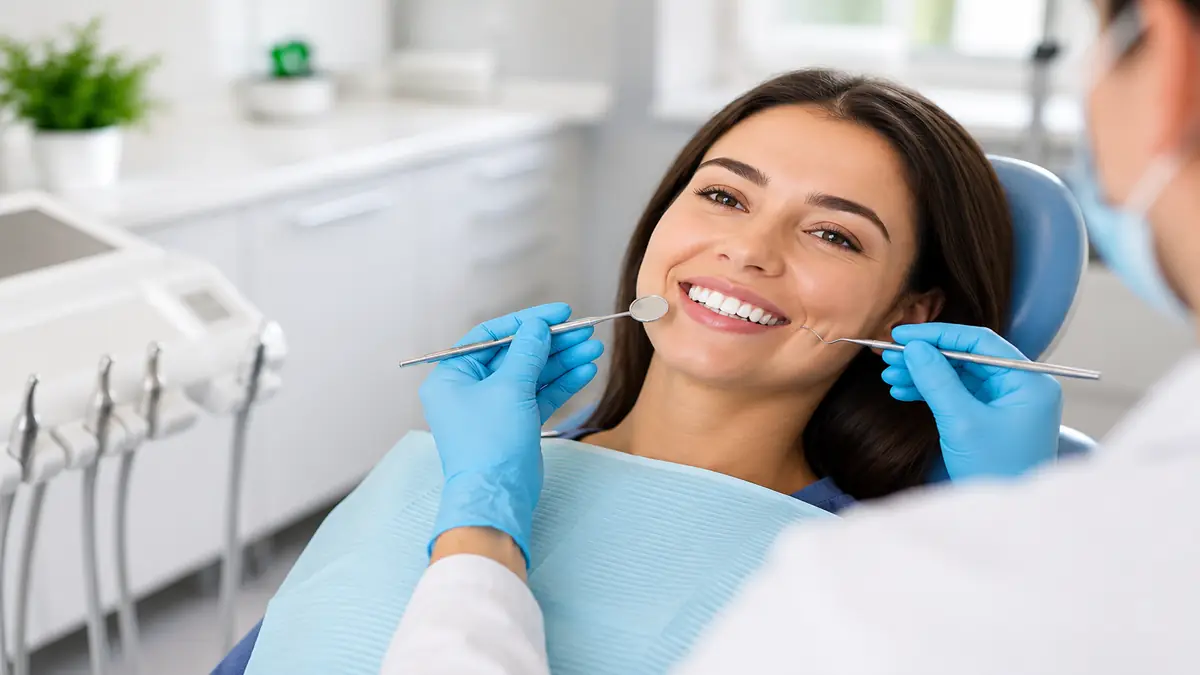
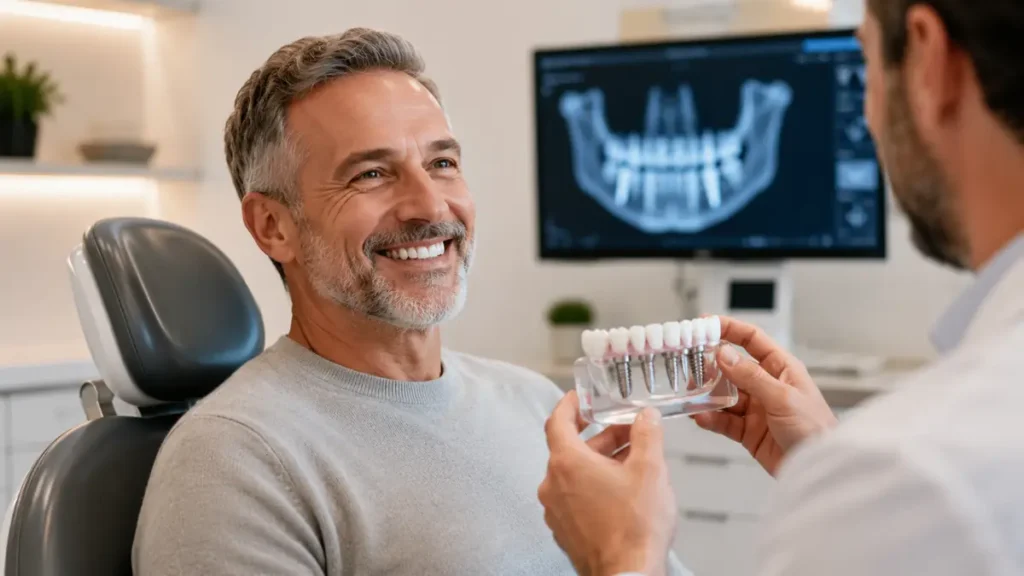
Living with loose dentures, multiple failing teeth, or an uncomfortable bite can affect much more than appearance. It can change how you eat, speak, socialize, and feel when you smile. Full-arch implant treatment offers selected patients a fixed alternative designed to restore an entire upper or lower set of teeth.
Dental Associates of Plainfield provides single-tooth, multiple-tooth, and full-arch implant replacement, supported by digital scanning and three-dimensional CBCT imaging. For patients in Plainfield, Will County, and the southwest Chicago suburbs, the treatment process begins with a detailed evaluation—not a one-size-fits-all promise.
What Are All-on-4 Dental Implants?
The Short Answer: All-on-4 treatment uses four strategically positioned dental implants to support a fixed, full-arch restoration. The exact number and placement may change when bone anatomy, bite forces, health conditions, or restorative needs require another approach.
Dental implants are small posts surgically positioned in the jawbone to support replacement teeth. In an All-on-4 concept, four implants are distributed across one arch, with the back implants often angled to make efficient use of available bone and provide support for a fixed bridge.
The phrase “All-on-4” describes one specific treatment design. It does not mean every patient should receive exactly four implants. Some patients may benefit from five or six implants, bone grafting, a removable implant-supported denture, or another restorative plan.
The final recommendation depends on:
- Available bone volume and density
- Gum and oral health
- The condition of remaining teeth
- Jaw relationships and bite forces
- Smoking history
- Medical conditions and medications
- Bruxism or teeth-grinding habits
- Space required for the final bridge
- The patient’s cleaning ability and long-term goals
Modern research shows high short- and medium-term implant survival for fixed full-arch restorations supported by four to six implants. However, implant survival does not mean the restoration will never require adjustment, repair, or maintenance.
How “Teeth in a Day” Actually Works
The Short Answer: “Teeth in a Day” usually means that a temporary fixed bridge may be attached shortly after implant placement when adequate stability is achieved. The final permanent bridge is created only after healing and bite verification.
The phrase can sound as though a patient receives the final lifetime restoration in one appointment. In most cases, that is not what happens.
When the implants achieve sufficient initial stability and the surgical conditions are favorable, the dentist may attach a carefully designed temporary bridge on the day of surgery or shortly afterward. This allows the patient to leave with fixed teeth during the healing phase.
Immediate loading is not appropriate in every case. The decision depends on implant stability, bone quality, infection control, bite forces, treatment design, and the patient’s ability to follow a modified diet. Research indicates immediate loading can perform well in properly selected cases when strong initial implant stability is obtained.
The temporary bridge protects appearance and basic function, but patients must avoid excessive force while the implants integrate with the surrounding bone. The final restoration is designed after healing, when the team can refine the bite, shape, speech, comfort, and appearance.
All-on-4 Implants vs. Traditional Dentures
The Short Answer: All-on-4 restorations are fixed to implants and generally provide greater stability than removable dentures. Traditional dentures rest on the gums and are removable, making them less invasive initially but more dependent on tissue fit and ongoing adjustment.
| Comparison Area | All-on-4 Dental Implants | Traditional Removable Dentures |
|---|---|---|
| Stability and Slippage | Fixed to implants and designed to remain stable during speaking and chewing | May move as the supporting gums and bone change |
| Palate Coverage | Upper fixed bridges can often avoid broad palate coverage, depending on design | Upper dentures commonly cover part or most of the palate |
| Chewing Capacity | Usually provides stronger, more stable function after healing | Chewing efficiency is more dependent on fit, adhesive, and tissue support |
| Jawbone Preservation | Implants transfer functional forces into the jawbone around the implant sites | Does not stimulate the jawbone in the same way as implants |
| Expected Lifespan | Designed for long-term service, but the bridge and components may require repair or replacement | Often requires relining, adjustment, rebasing, or replacement as tissues change |
Implant-supported teeth can improve stability and comfort, but they are not maintenance-free. Biological complications, prosthetic wear, screw loosening, or chipping can occur over time. Regular professional care is essential for protecting the implants and restoration.
Traditional dentures remain appropriate for many patients, especially when surgery is not recommended or the patient prefers a removable treatment. The right choice should balance health, function, comfort, maintenance, treatment time, and financial priorities.
The Step-by-Step Implant Timeline
The Short Answer: Full-arch treatment typically includes consultation and imaging, surgical implant placement, a temporary restoration when clinically possible, several months of healing, and fabrication of the final bridge followed by long-term maintenance and hygiene visits.
Initial Consultation and 3D Imaging
The dentist reviews your medical history, medications, dental history, remaining teeth, gum condition, bite, and treatment goals. CBCT imaging provides a three-dimensional view of bone anatomy and important structures, while digital scans help plan the future restoration.
You should receive a written explanation of:
- Teeth that may need removal
- Proposed implant number and position
- Whether grafting may be required
- Temporary-tooth options
- Expected healing time
- Final restoration materials
- Maintenance requirements
- Estimated fees and payment responsibilities
Surgical Placement and Temporary Bridge
On the surgical day, any planned extractions are completed, the implants are placed, and the area is prepared for the temporary restoration.
When implant stability and clinical conditions allow, a fixed temporary bridge may be attached. Otherwise, a removable temporary option or delayed loading may be safer.
Patients receive instructions regarding medication, swelling management, oral hygiene, and a soft-food diet.
Healing and Osseointegration
During the following months, the bone heals around the implants in a process called osseointegration. Follow-up visits allow the dental team to monitor healing, tissue health, bridge fit, implant stability, hygiene, and bite forces.
The temporary bridge is not intended for unrestricted chewing. Following dietary instructions helps reduce excessive force during this critical period.
Final Permanent Bridge Placement
After healing, new records may be taken to design the final restoration. The dentist evaluates tooth shape, color, speech, lip support, bite, comfort, and access for cleaning.
Once the final bridge is delivered, continued maintenance becomes part of treatment. Professional full-arch implant maintenance may be recommended every two to six months depending on gum history, smoking, health, cleaning ability, and other risk factors.
Are You a Candidate for Full-Arch Implants?
The Short Answer: Candidates generally have a failing or missing full arch, adequate bone or a workable surgical alternative, manageable health conditions, realistic expectations, and the ability to maintain daily hygiene, follow recovery instructions, and attend long-term professional maintenance.
Potential candidates include patients who:
- Have lost most or all teeth in one arch
- Have multiple teeth that cannot be predictably restored
- Struggle with unstable removable dentures
- Want a fixed tooth-replacement option
- Have sufficient bone or qualify for an alternative implant plan
- Can safely undergo oral surgery
- Are willing to maintain the restoration carefully
Certain factors may increase risk or change the treatment plan, including uncontrolled diabetes, active gum disease, heavy smoking, untreated infection, severe grinding, some medications, and medical conditions affecting healing.
Healthy teeth should not be removed merely to simplify treatment. The ADA has emphasized the importance of appropriate diagnosis and informed treatment planning after reports of patients experiencing harm in high-volume implant settings.
Frequently Asked Questions About Full-Arch Restorations
The Short Answer: Full-arch implant costs, comfort, longevity, and financing vary because treatment is highly individualized. Reliable answers require diagnostic imaging, a restorative plan, medical review, and a written estimate explaining surgery, temporary teeth, final teeth, and maintenance.
1. What primary clinical factors influence the final teeth in a day Plainfield IL cost?
The final cost may depend on required extractions, implant number, bone grafting, anesthesia, temporary restoration design, final bridge material, laboratory work, diagnostic imaging, and follow-up care. A consultation is required to determine which procedures are clinically necessary.
2. Why should I invest in full arch dental implants Chicago suburbs over standard removable plates?
Full-arch implants may provide improved stability, reduced movement, stronger function, and a fixed restoration for suitable patients. However, they involve surgery, healing, greater initial investment, and lifelong maintenance. Removable dentures may remain appropriate for patients who prefer a nonsurgical or lower-cost approach.
3. Where can I find transparent financing options for all on 4 dental implants cost near me?
Begin by requesting a complete written treatment plan that separates diagnostic, surgical, temporary, restorative, and maintenance costs. Ask the dental office about current payment arrangements or third-party financing, then review interest rates, promotional periods, fees, and total repayment amounts before signing.
4. Is the surgical placement procedure for All-on-4 implants painful during or after care?
Local anesthesia and other appropriate comfort measures are used during surgery. Patients may experience swelling, soreness, bruising, or temporary discomfort afterward. The intensity and duration vary according to the procedure, health history, extractions, grafting, and individual healing response.
5. How long do permanent All-on-4 implant-supported bridges typically last with proper oral hygiene?
Implants and bridges are designed for long-term use, but no restoration can be guaranteed for life. Longevity depends on hygiene, smoking, gum health, bite forces, material choice, medical health, and professional maintenance. Bridge teeth, screws, or other components may eventually require repair or replacement.
Reclaim Stability, Comfort, and Confidence
If removable dentures are limiting your comfort or multiple teeth are failing, a full-arch implant evaluation can clarify whether a fixed solution is appropriate for your health, anatomy, and goals.
Call our local Plainfield office today at (815) 436-4900 or request your appointment online at DentalPlainfield.com to schedule your full-arch implant consultation and reclaim your smile.