If you want to improve chipped, stained, uneven, or slightly gapped teeth, two of the most common cosmetic dentistry options are dental bonding and porcelain veneers. Both can enhance your smile, but they are not the same in cost, durability, appearance, or treatment process.
For patients searching for dental bonding in Plainfield IL, bonding is often a fast and affordable option for minor cosmetic improvements. Porcelain veneers, on the other hand, are typically chosen for a longer-lasting and more dramatic smile makeover.
The right choice depends on your smile goals, your budget, the condition of your teeth, and the recommendation of an experienced cosmetic dentist in Plainfield IL.
Dental Bonding vs. Veneers: Quick Comparison
| Feature | Dental Bonding | Porcelain Veneers |
|---|---|---|
| Best For | Small chips, minor gaps, slight reshaping, small cosmetic flaws | Full smile makeovers, severe stains, uneven teeth, larger cosmetic changes |
| Material | Tooth-colored composite resin | Custom porcelain ceramic |
| Treatment Time | Often completed in one visit | Usually completed in two or more visits |
| Tooth Preparation | Minimal or no enamel removal in many cases | Usually requires removal of a thin layer of enamel |
| Appearance | Natural-looking, but may stain over time | Highly natural, polished, and stain-resistant |
| Durability | Commonly lasts several years with proper care | Often lasts 10 years or longer with proper care |
| Cost | Lower upfront cost | Higher upfront investment |
| Reversibility | Often reversible or repairable | Usually not reversible once enamel is prepared |
What Is Dental Bonding?
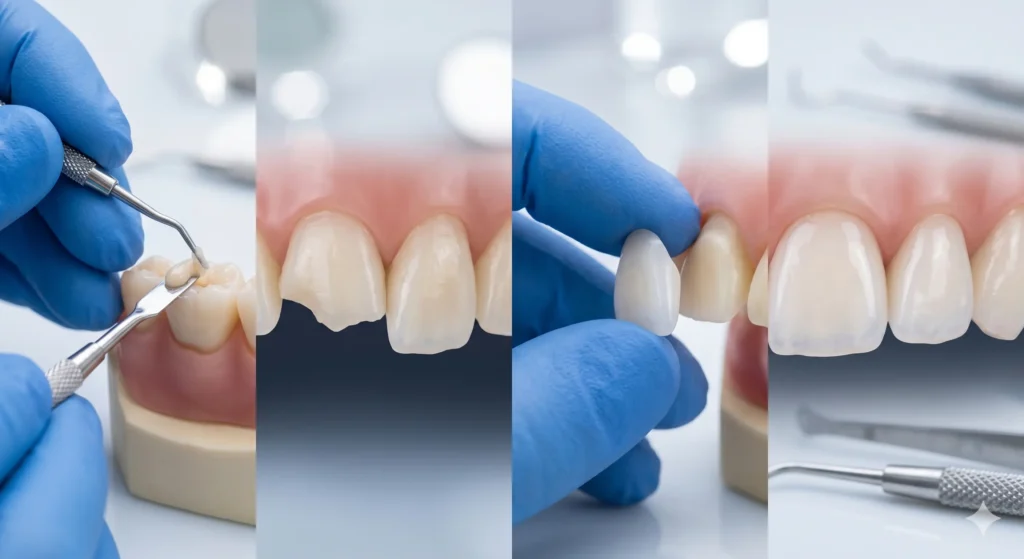
Dental bonding is a cosmetic dental treatment that uses a tooth-colored composite resin to improve the shape, color, or appearance of a tooth. The resin is applied directly to the tooth, shaped by the dentist, hardened with a curing light, and polished to blend with your natural enamel.
Bonding is commonly used to repair:
Small chips
Minor cracks
Small gaps between teeth
Uneven tooth edges
Mild discoloration
Slightly misshapen teeth
One of the biggest advantages of dental bonding is convenience. In many cases, treatment can be completed in a single appointment. It is also more conservative than veneers because it often requires little to no enamel removal.
For patients looking for dental bonding Plainfield IL, this can be a strong option when the goal is to improve one or two teeth without committing to a larger cosmetic treatment.
What Are Porcelain Veneers?
Porcelain veneers are thin, custom-made ceramic shells that are bonded to the front surface of the teeth. They are designed to improve the color, shape, size, alignment, and overall appearance of your smile.
Veneers are often recommended for patients who want to correct:
Deep staining that does not respond well to whitening
Multiple uneven or worn teeth
Noticeable gaps
Small or irregularly shaped teeth
A more complete smile transformation
Unlike bonding, veneers are made outside the mouth, often by a dental lab or using advanced digital dental technology. Because veneers are custom-designed, they can provide a highly polished, natural-looking, and long-lasting result.
However, porcelain veneers usually require the dentist to remove a thin layer of enamel so the veneers fit properly. For this reason, veneers are considered a more permanent cosmetic treatment.
Porcelain Veneers vs. Dental Bonding Cost
When comparing porcelain veneers vs dental bonding cost, bonding usually has the lower upfront price. This is because bonding uses composite resin applied directly by the dentist and typically does not require lab fabrication.
Porcelain veneers usually cost more because they involve custom design, premium ceramic materials, more detailed planning, and multiple appointments.
In simple terms:
Dental bonding is usually better for patients who want a fast, budget-friendly improvement.
Porcelain veneers are usually better for patients who want a longer-lasting, more dramatic smile transformation.
The best way to compare cost accurately is to schedule a cosmetic consultation. Pricing can vary depending on how many teeth are treated, the complexity of the case, and whether additional dental care is needed first.
How Long Does Dental Bonding Last?
A common question patients ask is, how long does dental bonding last?
Dental bonding can last several years with good oral care, but it usually does not last as long as porcelain veneers. Composite resin is strong, but it is more porous than porcelain. That means it may stain, chip, or wear down over time, especially if you frequently drink coffee, tea, red wine, or smoke.
Bonding may also be more likely to need touch-ups if you bite your nails, chew ice, grind your teeth, or use your teeth to open packaging.
To help dental bonding last longer:
Brush and floss daily
Schedule regular dental cleanings
Avoid biting hard objects
Limit staining foods and drinks
Wear a nightguard if you grind your teeth
Visit your dentist if bonding feels rough, loose, or chipped
How Long Do Porcelain Veneers Last?
Porcelain veneers are generally more durable and stain-resistant than dental bonding. With proper care, they can often last 10 years or longer.
Veneers are not indestructible, but porcelain is highly resistant to staining and can maintain its color and shine better than composite resin. Patients who want a long-term cosmetic result often choose veneers because of their strength, appearance, and ability to transform multiple teeth at once.
To protect porcelain veneers, it is important to maintain good oral hygiene, avoid using your teeth as tools, and keep regular dental visits.
Which Option Looks More Natural?
Both bonding and veneers can look natural when performed by a skilled cosmetic dentist.
Dental bonding can blend very well with surrounding teeth, especially for small repairs. It is a great option when only one small area needs improvement.
Porcelain veneers usually provide the most polished and customized cosmetic result. Because porcelain reflects light similarly to natural enamel, veneers can create a bright, balanced, and highly realistic smile.
If you are only fixing a small chip, bonding may be enough. If you want a complete smile makeover, veneers may provide a more refined result.
Is Dental Bonding or Veneers Better?
There is no one-size-fits-all answer. The better choice depends on your teeth and your goals.
Dental bonding may be better if:
You have a small chip or minor flaw
You want a more affordable option
You prefer a same-day treatment
You want to preserve as much natural tooth structure as possible
You are not ready for a permanent cosmetic procedure
Porcelain veneers may be better if:
You want a complete smile makeover
You have several teeth you want to improve
You have deep stains that whitening cannot fix
You want a longer-lasting cosmetic result
You want the most polished and stain-resistant option
When to See a Cosmetic Dentist in Plainfield IL
If you are comparing bonding and veneers, the most important step is a personalized cosmetic consultation. A dentist can examine your teeth, bite, enamel, gum health, and smile goals before recommending the right treatment.
In some cases, dental bonding may be enough. In other cases, veneers, whitening, orthodontics, or a combination of treatments may create a better result.
A trusted cosmetic dentist in Plainfield IL can help you understand the pros, cons, cost, and expected lifespan of each option before you make a decision.
Final Thoughts: Bonding vs. Veneers
Dental bonding and porcelain veneers can both improve your smile, but they serve different needs.
Dental bonding is usually best for small, affordable, and conservative cosmetic improvements. Porcelain veneers are usually best for patients who want a longer-lasting and more complete smile transformation.
If you are interested in dental bonding in Plainfield IL or want to compare bonding with veneers, schedule a cosmetic consultation to find the option that fits your smile, budget, and long-term goals.
FAQs About Dental Bonding and Veneers
Is dental bonding cheaper than porcelain veneers?
Yes. Dental bonding usually has a lower upfront cost than porcelain veneers. Veneers typically cost more because they are custom-made and require more planning, materials, and appointments.
Can dental bonding fix gaps?
Dental bonding can often close small gaps between teeth. Larger gaps or bite-related issues may require veneers, orthodontics, or another treatment.
Does dental bonding stain?
Yes, bonding can stain over time because composite resin is more porous than porcelain. Coffee, tea, red wine, tobacco, and poor oral hygiene can increase staining.
Are porcelain veneers permanent?
Porcelain veneers are usually considered permanent because a thin layer of enamel is often removed before placement. Once enamel is prepared, the tooth will typically always need a veneer or another restoration.
Which lasts longer, bonding or veneers?
Porcelain veneers usually last longer than dental bonding. Bonding may need touch-ups or replacement sooner, while veneers often provide a longer-lasting cosmetic result with proper care.
Should I choose bonding or veneers?
Choose bonding if you want a quick and affordable fix for small flaws. Choose veneers if you want a more dramatic, durable, and stain-resistant smile makeover. The best choice should be made after an exam with a cosmetic dentist.