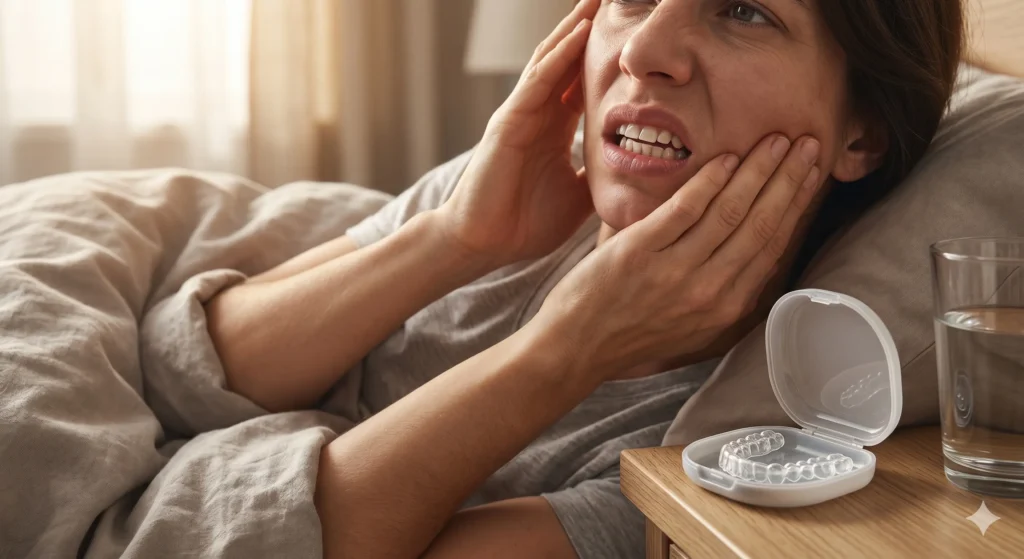
Waking up with jaw pain, facial soreness, headaches, or sensitive teeth can be frustrating, especially when you do not know what is causing it. For many patients, morning jaw discomfort is related to nighttime clenching, teeth grinding, or stress placed on the temporomandibular joints, also known as the TMJ.
If you are searching for TMJ treatment in Plainfield IL, the first step is understanding whether your symptoms may be connected to bruxism, TMJ disorder, bite imbalance, stress, or another underlying dental or medical concern.
The good news is that many cases can be managed with conservative treatment, including custom night guards, bite evaluation, jaw relaxation strategies, and professional dental care.
Quick Answer: Why Does My Jaw Hurt When I Wake Up?
Morning jaw pain is commonly linked to nighttime teeth grinding or clenching, also known as sleep bruxism. When the jaw muscles stay active during sleep, they can become sore and tight by morning. This can also place pressure on the teeth, jaw joints, and surrounding facial muscles.
However, jaw pain can have more than one cause. TMJ disorders, stress, bite alignment issues, arthritis, jaw injury, sleep apnea, or other health factors may also contribute. A dental evaluation can help identify the cause and determine the right treatment.
TMJ vs. Bruxism: What Is the Difference?
| Condition | What It Means | Common Symptoms | Common Treatment Options |
| Bruxism | Grinding or clenching the teeth, often during sleep | Worn teeth, tooth sensitivity, jaw soreness, morning headaches | Custom night guard, stress reduction, bite evaluation |
| TMJ Disorder / TMD | A problem involving the jaw joint or jaw muscles | Jaw clicking, popping, locking, facial pain, chewing discomfort | Custom appliance, jaw exercises, bite therapy, physical therapy, dental treatment |
| Both Together | Bruxism can place extra stress on the TMJ | Jaw pain, headaches, tooth wear, muscle tension | Comprehensive dental evaluation and customized treatment plan |
Why Does My Jaw Hurt When I Wake Up?
If you are researching waking up with jaw pain causes, nighttime clenching or grinding is one of the most common possibilities.
During sleep, some people unconsciously tighten the jaw muscles, clench the teeth together, or grind the upper and lower teeth against each other. This can overwork the jaw muscles and create soreness by morning.
Common causes or contributing factors may include:
Stress or anxiety
Sleep bruxism
TMJ disorder
Uneven bite pressure
Jaw muscle tension
Sleep apnea or airway-related concerns
Certain medications or lifestyle factors
Arthritis or joint inflammation
Previous jaw injury
Jaw pain that happens once in a while may improve on its own. But if you wake up with jaw pain regularly, have headaches, notice tooth sensitivity, or hear clicking in the jaw, it is a good idea to schedule an evaluation with a dentist.
Signs You Are Grinding Your Teeth at Night
Bruxism can be difficult to notice because it often happens while you are asleep. Many people do not realize they grind their teeth until a dentist sees signs of wear or a sleep partner hears grinding sounds at night.
You may need teeth grinding at night treatment if you notice:
Waking up with jaw soreness or tightness
Morning headaches, especially near the temples
Teeth that look flat, worn, chipped, or cracked
Tooth sensitivity to cold, heat, or sweets
Pain when chewing
Tightness in the face, neck, or shoulders
Scalloped edges on the tongue
Soreness inside the cheeks
Broken fillings, crowns, or dental restorations
A clicking or popping jaw
Not every patient has every symptom. Some people only notice tooth wear, while others mainly feel muscle soreness or headaches.
What Is TMJ Disorder?
TMJ stands for temporomandibular joint. These are the joints on each side of your head that connect your lower jaw to your skull. They help you chew, speak, yawn, and open and close your mouth.
TMJ disorder, often called TMD, refers to pain or dysfunction involving the jaw joints, jaw muscles, or surrounding structures.
Common TMJ disorder symptoms include:
Jaw pain or tenderness
Clicking or popping when opening the mouth
Difficulty chewing
Jaw locking or limited opening
Ear-area discomfort
Facial pain
Headaches
Neck pain
Tooth pain with jaw tenderness
A clicking jaw does not always mean you need treatment. If clicking happens without pain or difficulty moving the jaw, it may not require care. But if clicking is paired with pain, locking, limited movement, or worsening symptoms, a professional evaluation is recommended.
How Bruxism and TMJ Pain Are Connected
Bruxism and TMJ problems often overlap. Teeth grinding can place repeated pressure on the jaw joints and surrounding muscles. Over time, this may contribute to jaw soreness, inflammation, headaches, and tooth damage.
At the same time, TMJ dysfunction can make the jaw muscles work harder, which may increase clenching or discomfort.
That is why treatment should not focus only on the teeth. A proper evaluation should also consider the bite, jaw joints, muscles, airway, sleep habits, and daily stress triggers.
How a Custom Night Guard Protects Your Teeth and Jaw
A custom dental night guard is a professionally made oral appliance worn while sleeping. It is designed to fit your teeth precisely and create a protective barrier between the upper and lower teeth.
A custom night guard may help:
Reduce tooth wear from grinding
Protect enamel from chips and cracks
Lower the risk of broken fillings or crowns
Reduce pressure on the jaw joints
Help relax overworked jaw muscles
Improve morning comfort for some patients
When comparing custom night guard cost in Plainfield, it is important to think about long-term protection. A professional night guard may cost more than an over-the-counter option, but it is designed specifically for your bite and is usually more durable and comfortable.
Custom Night Guard vs. Store-Bought Mouth Guard
| Feature | Custom Night Guard | Store-Bought Mouth Guard |
| Fit | Made from a dental scan or impression | Generic or boil-and-bite fit |
| Comfort | Designed for your mouth | May feel bulky |
| Durability | Usually stronger and longer-lasting | May wear out faster |
| Bite Support | Designed around your bite | Not customized to your bite |
| Protection | Better for long-term grinding protection | May help short-term but is less precise |
| Professional Monitoring | Dentist can adjust and monitor it | No professional follow-up |
Store-bought mouth guards may be useful as a temporary option, but they are not ideal for every patient. Some may feel bulky, fit poorly, or make symptoms worse if they do not support the bite properly.
TMJ Treatment Options in Plainfield
If you are looking for TMJ treatment Plainfield IL, the right treatment depends on what is causing your symptoms. TMJ and bruxism are not treated the same way for every patient.
A dentist may recommend:
Custom night guard or stabilization appliance
Bite evaluation
Jaw relaxation exercises
Lifestyle changes to reduce clenching triggers
Physical therapy referral
Anti-inflammatory care when appropriate
Clear aligners if bite alignment contributes to symptoms
Restorative dental treatment if damaged teeth affect the bite
Referral to a physician or sleep specialist if sleep apnea is suspected
Most TMJ treatment begins with conservative options. Surgery is usually considered only in more serious cases when non-invasive treatment has not helped.
When Should You See a Dentist for Jaw Pain?
You should schedule a dental evaluation if you experience:
Jaw pain that does not go away
Jaw locking or trouble opening your mouth
Frequent morning headaches
Worn, chipped, or cracked teeth
Pain while chewing
Tooth sensitivity with no clear cause
A night guard that no longer fits
Jaw clicking with pain or limited movement
Early treatment can help protect your teeth, reduce discomfort, and prevent symptoms from becoming more difficult to manage.
Final Thoughts: Finding Relief from Jaw Pain in Plainfield
Waking up with jaw pain is not something you should ignore, especially if it happens often. Teeth grinding, TMJ disorder, bite problems, stress, and sleep-related issues can all play a role.
A custom night guard may be the right solution for some patients, while others may need a more complete TMJ treatment plan. The best way to know is to schedule an exam with a dentist who can evaluate your teeth, bite, jaw joints, and symptoms.
If you are searching for TMJ treatment in Plainfield IL, a professional evaluation can help you understand the cause of your jaw pain and choose the right path toward relief.
FAQs About TMJ, Bruxism, and Jaw Pain
Why do I wake up with jaw pain?
You may wake up with jaw pain because of nighttime teeth grinding, clenching, TMJ disorder, stress, bite imbalance, or sleep-related issues. A dentist can check for tooth wear, muscle tenderness, and bite problems.
What are the signs of teeth grinding at night?
Signs include morning jaw soreness, headaches, worn teeth, chipped teeth, tooth sensitivity, cheek soreness, and jaw tightness. Some people also hear grinding sounds during sleep.
Can TMJ disorder cause headaches?
Yes. TMJ disorder can contribute to headaches, especially around the temples, face, jaw, and neck. However, headaches can have many causes, so a proper evaluation is important.
Does a night guard stop teeth grinding?
A night guard may not stop the grinding habit itself, but it can help protect your teeth, reduce wear, and lower pressure on the jaw muscles and joints.
Is a custom night guard better than a store-bought mouth guard?
For long-term teeth grinding or TMJ symptoms, a custom night guard is usually better because it is made specifically for your teeth and bite. Store-bought options may be less comfortable, less durable, and less precise.
How much does a custom night guard cost in Plainfield?
The custom night guard cost in Plainfield can vary depending on the dental office, materials, complexity of the bite, and whether insurance benefits apply. The best way to get an accurate price is to schedule an evaluation.
What is the best TMJ treatment?
The best TMJ treatment depends on the cause of your symptoms. Options may include a custom appliance, bite adjustment, jaw exercises, stress management, physical therapy, clear aligners, or restorative treatment.
When should I get TMJ treatment?
You should consider treatment if jaw pain, headaches, tooth wear, clicking with pain, or difficulty opening your mouth are affecting your daily life or happening regularly.