
As a parent, you want to protect your child’s health, confidence, and comfort. That includes helping them avoid painful cavities, unexpected dental visits, and future treatment when prevention may be possible. For many families searching for dental sealants Plainfield IL, sealants are one of the simplest ways to help protect children’s back teeth from decay.
Even with good brushing habits, kids can miss the deep grooves and pits on their molars. These back teeth are designed for chewing, but their uneven surfaces can trap food, plaque, and bacteria. Once bacteria settle into those grooves, cavities can form faster than parents expect.
Dental sealants create a thin protective layer over those hard-to-clean chewing surfaces. They are quick, non-invasive, and commonly recommended for children once their permanent molars come in.
If you are looking for a pediatric dentist Plainfield IL cavity prevention option, this guide explains what dental sealants are, how they work, whether they are safe, and when your child may need them.
What Are Dental Sealants?
Dental sealants are thin, tooth-colored or clear protective coatings placed on the chewing surfaces of the back teeth, especially the molars and premolars. These are the teeth children use most for grinding food.
Molars naturally have small grooves and pits. Even when a child brushes twice a day, toothbrush bristles may not fully reach into every deep groove. Sealants help by covering those areas and creating a smoother surface that is easier to keep clean.
Sealants are most often placed on permanent molars, but in some cases, a dentist may recommend them for baby teeth if those teeth have deep grooves and are at high risk for cavities.
For Plainfield families, dental sealants can be a smart preventive step during the school-age years, especially when children are still learning consistent brushing and flossing habits.
How Do Sealants Prevent Cavities?
Sealants work by blocking food particles, plaque, and cavity-causing bacteria from settling into the deep grooves of the back teeth. Instead of bacteria hiding in the pits of the molars, the sealant creates a protective shield over the enamel.
This matters because back teeth are where many childhood cavities begin. Kids may brush the front teeth well but rush through the molars. Sticky snacks, juice, sports drinks, crackers, candy, and frequent snacking can increase the risk of decay.
Dental sealants do not replace brushing, flossing, fluoride, or regular dental visits. However, they add another layer of protection. For many children, sealants are part of a complete cavity prevention plan that includes:
Brushing twice daily
Flossing as recommended
Fluoride toothpaste
Regular dental cleanings
Healthy snack habits
Routine dental exams
Sealants are especially helpful for children who have deep molar grooves, a history of cavities, difficulty brushing thoroughly, or a higher risk of tooth decay.
Are Dental Sealants Safe for Kids?
One of the most common questions parents ask is: are dental sealants safe for children?
For most children, dental sealants are considered safe and effective. They have been used for many years in preventive dentistry and are commonly recommended for school-age children and teens. The material bonds to the tooth surface and stays on the chewing area of the molar.
The process does not require drilling, shots, or removal of healthy tooth structure. It is painless and usually completed in one visit.
Parents who have concerns about materials, allergies, fluoride exposure, or their child’s medical history should discuss those questions with the dentist before treatment. A pediatric or family dentist can explain what type of sealant material is being used and whether it is appropriate for your child.
For families searching for dental sealants Plainfield IL, the goal is simple: protect the teeth early before a small cavity becomes a bigger problem.
The Pain-Free Application Process
The dental sealant process is fast, gentle, and kid-friendly. Most children tolerate it very well because there are no needles and no drilling.
Here is what usually happens during a sealant appointment:
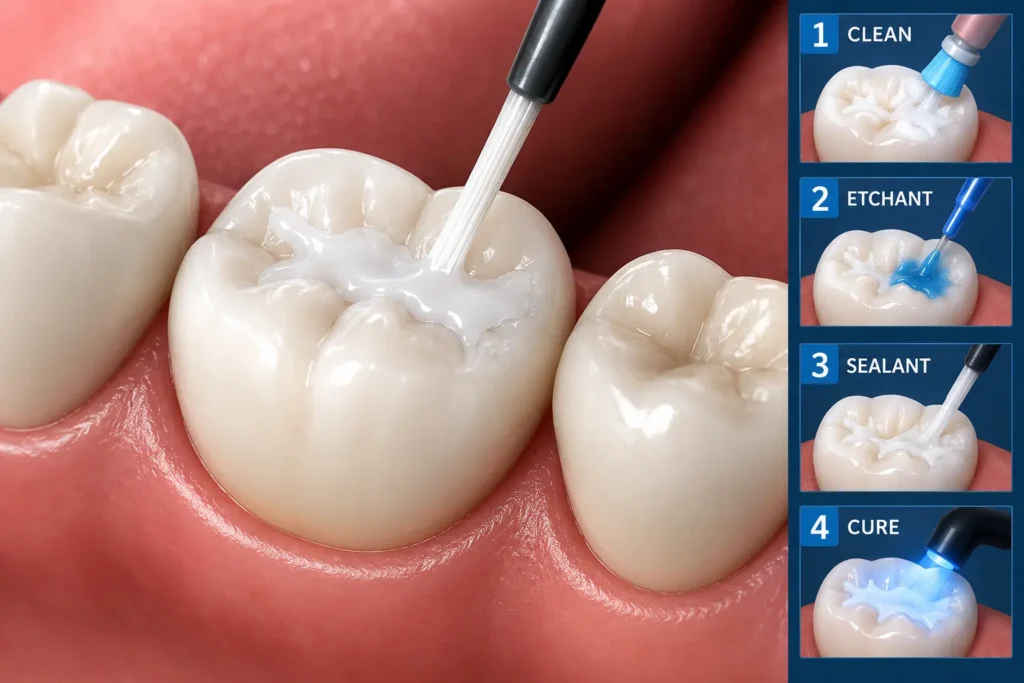
First, the dentist or hygienist cleans and dries the tooth. The molar must be free of plaque and food particles so the sealant can bond properly.
Next, a special solution is placed on the tooth surface to help the sealant attach. This step is quick and does not hurt.
Then, the tooth is rinsed and dried again. The sealant material is carefully painted into the grooves of the molar.
Finally, a special curing light may be used to harden the sealant. Once it is set, the dentist checks the bite to make sure everything feels comfortable.
After the appointment, your child can usually eat and drink normally. There is no downtime, and the tooth is immediately protected.
At What Age Should Children Get Sealants?
Many children benefit from sealants when their first permanent molars come in, usually around age 6. The second permanent molars often come in around age 12. These are common milestone ages when dentists may recommend sealants.
The best time to place sealants is soon after the permanent molars erupt. That way, the teeth are protected before cavities have a chance to start.
However, age is not the only factor. A dentist may also consider your child’s cavity history, enamel strength, diet, brushing ability, and the depth of the grooves in the molars.
If your child is between ages 6 and 14, it may be a good time to ask about sealants at their next dental visit.
How Long Do Dental Sealants Last?
Parents often search how long do dental sealants last because they want to know whether treatment is worth it. Sealants can last for several years, but they should be checked at regular dental visits.
Over time, sealants may wear down, chip, or loosen from chewing pressure. If that happens, the dentist can repair or reapply them as needed.
To help sealants last longer, children should avoid chewing ice, biting hard candy, or using teeth to open packages. Good brushing and regular dental checkups also help keep sealants in good condition.
Pediatric Dentist Plainfield IL Cavity Prevention
Dental sealants are not just a treatment. They are a prevention tool. For children in Plainfield, IL, they can help reduce the risk of cavities during important growth years when permanent teeth are still developing and brushing habits are still improving.
A local dental team can evaluate your child’s teeth, explain whether sealants are recommended, and create a prevention plan that fits your child’s needs.
If you are searching for pediatric dentist Plainfield IL cavity prevention or dental sealants Plainfield IL, scheduling a dental exam is the best next step.
Protect Your Child’s Smile with Dental Sealants in Plainfield, IL
Cavities can affect your child’s comfort, school routine, eating habits, and confidence. Dental sealants offer a simple way to help protect the teeth most likely to develop decay.
If your child’s permanent molars have come in, now may be the right time to ask about sealants.
Call today or request an appointment online to schedule a pediatric dental sealant consultation in Plainfield, IL.