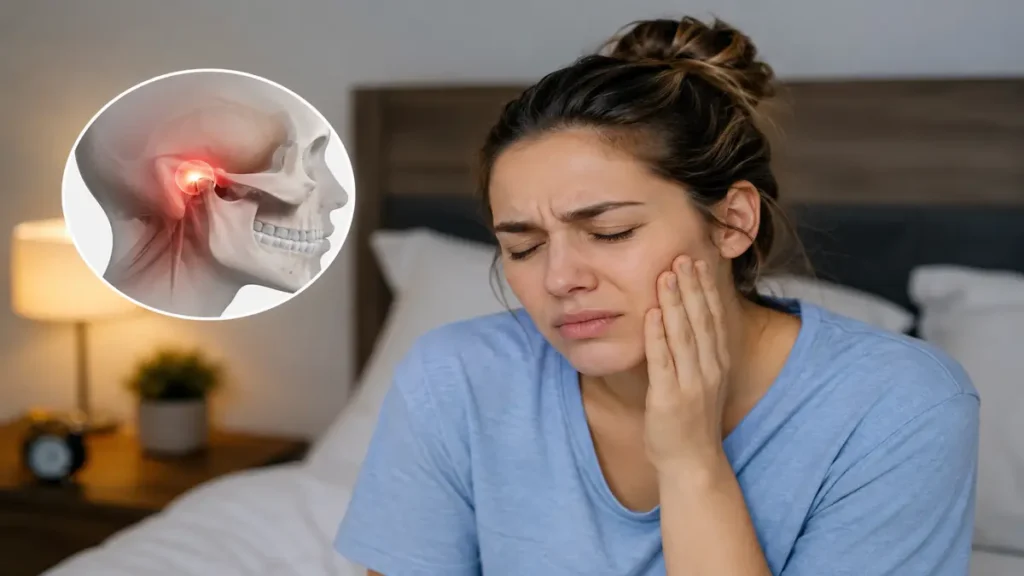
Waking with a tight jaw, sore cheeks, sensitive teeth, or a headache can make the day begin with discomfort. For many patients in Plainfield and the southwest Chicago suburbs, these symptoms may be connected to nighttime clenching, teeth grinding, overworked jaw muscles, or a temporomandibular disorder.
Many jaw-pain conditions can be managed conservatively. The first step is determining whether the problem comes from bruxism, the jaw joint, the chewing muscles, a damaged tooth, or another condition.
Why Does My Jaw Hurt When I Wake Up? (Symptom Checker)
The Short Answer: Morning jaw pain often points to overnight clenching or grinding, overworked chewing muscles, or a temporomandibular disorder. Headaches, tooth sensitivity, facial soreness, or limited opening make a dental evaluation especially important.
Common causes of jaw pain in morning hours include sleep bruxism, prolonged clenching, muscle tension, and jaw-joint irritation. Symptoms may include cheek or temple tenderness, stiffness, a tired jaw, tooth sensitivity, or pain that worsens with chewing.
Not every morning headache or jaw ache is TMD. Dental infections, cracked teeth, sinus conditions, ear problems, and other facial-pain disorders can feel similar. A dentist evaluates the teeth, bite, jaw movement, muscles, and symptom pattern. NIDCR notes that jaw or facial pain may or may not be TMD, so other conditions sometimes must be ruled out.
Seek prompt care for jaw locking, severe limitation, swelling, trauma, fever, difficulty swallowing, or breathing problems.
Signs You Are Grinding Your Teeth at Night (Bruxism)
The Short Answer: Sleep bruxism may reveal itself through flattened or chipped teeth, morning jaw fatigue, temple headaches, tooth sensitivity, damaged restorations, or grinding sounds noticed by a partner, even when you never remember doing it.
Bruxism means clenching, grinding, or repetitive jaw activity while awake or asleep. Because sleep bruxism is unconscious, many patients discover it only after a partner hears grinding or a dentist notices wear.
Signs include flattened or cracked teeth, sensitivity, tight jaw muscles, facial pain, morning headaches, and damaged fillings or crowns. Stress may contribute, but caffeine, alcohol, smoking, certain medications, genetics, and sleep-related conditions may also play a role. Severe bruxism can damage teeth, while mild cases may only require monitoring.
An effective teeth grinding at night treatment plan begins with identifying the patient’s symptoms, wear pattern, medical history, sleep concerns, and possible contributing habits rather than simply purchasing a generic mouthguard.
What Is TMJ Disorder?
The Short Answer: TMJ disorder, more accurately called a temporomandibular disorder, describes conditions affecting the jaw joints, chewing muscles, or both. It can cause pain, stiffness, clicking, limited movement, or locking, but painless clicking alone may not require treatment.
The temporomandibular joints connect the lower jaw to the skull in front of each ear. “TMD” is the preferred term for disorders affecting the joints, chewing muscles, or both.
Symptoms can include pain, stiffness, limited opening, locking, painful clicking, or discomfort spreading into the face or neck. Clicking without pain is common and does not automatically require treatment.
Bruxism and TMD are related but not identical. Grinding may aggravate symptoms, but not everyone who grinds has TMD, and not every TMD case is caused by grinding.
How a Custom Night Guard Protects Your Teeth and Jaw
The Short Answer: A properly fitted dental night guard creates a barrier between the teeth, reducing direct wear and protecting enamel and restorations. It does not cure every cause of bruxism or guarantee relief from TMJ pain.
A custom night guard is made from impressions or digital scans. Its main role is to separate the teeth and reduce grinding damage. NIDCR notes that appliances may protect teeth and reduce muscle activity, but evidence that they consistently improve TMD pain is limited. They should not permanently change the bite.
| Comparison Area | Custom Dental Night Guard | Over-the-Counter Store Mouthguard |
| Fit Precision | Made from the patient’s teeth or digital scan | Generic or self-molded fit |
| Jaw Alignment | Designed around the existing bite and should not permanently reposition the jaw | Not designed to diagnose or correct jaw alignment |
| Material Durability | Material is selected for the patient’s bite and wear pattern | Thickness, strength, and durability vary |
| Enamel Protection | Provides planned tooth coverage and separation | Protection depends heavily on fit and consistent use |
A sports mouthguard absorbs athletic impact; it is not intended to manage nighttime grinding. The ADA identifies athletic mouthguards as devices used to reduce sports-related oral injuries.
A night guard should also be monitored over time. Patients should bring it to regular dental visits so the dentist can evaluate its fit, wear, cleanliness, and effect on the bite.
TMJ Treatment Options in Plainfield
The Short Answer: TMJ treatment usually begins conservatively with diagnosis, habit awareness, a softer diet, heat or cold, guided exercises, stress management, and appropriate medication. Splints or referrals may be considered when symptoms persist or the diagnosis requires them.
TMJ treatment Plainfield IL patients receive should match the source of the pain. A night guard may be helpful for tooth protection in one patient, while another may need muscle-focused care, dental treatment, physical therapy, or evaluation for a sleep-related condition.
Early care may include:
- Temporarily eating softer foods
- Reducing gum chewing and nail biting
- Keeping the teeth apart while resting
- Applying heat or cold as directed
- Performing professionally recommended jaw exercises
- Identifying daytime clenching habits
- Improving sleep and stress-management routines
Depending on the findings, care may also include short-term medication guidance, physical therapy, behavioral strategies, repair of damaged teeth, a custom appliance, or referral to an orofacial pain, sleep-medicine, or medical specialist.
NIDCR recommends beginning with simple, reversible treatments and avoiding procedures that permanently change the teeth, bite, or jaw unless they are clearly indicated by the diagnosis.
Stop using an appliance and contact the dentist if it increases pain, changes the way the teeth fit together, or causes new symptoms.
Frequently Asked Questions About Jaw Pain and Teeth Grinding
The Short Answer: Jaw pain and teeth grinding are often manageable, but treatment depends on the cause, severity, dental damage, health history, and insurance benefits. A focused examination provides more reliable answers than choosing a generic mouthguard or self-diagnosing.
1. Can daily stress or anxiety worsen teeth grinding at night?
Yes. Stress and emotional distress are associated with bruxism in some patients. Relaxation techniques, improved sleep routines, and reducing evening caffeine or alcohol may help, but persistent symptoms still require a dental evaluation.
2. How long does a custom dental night guard typically last before replacement?
There is no universal lifespan. Replacement depends on grinding intensity, appliance material, fit, cleaning habits, dental changes, and visible wear. Bring the guard to dental visits so it can be checked for cracks, thinning, distortion, or changes in fit.
3. Does medical or dental insurance cover TMJ treatment in Illinois?
There is no universal yes-or-no answer. Coverage may depend on the treatment, diagnosis, insurance plan, provider network, and whether the service is classified as dental or medical. Request treatment codes and confirm benefits, exclusions, and authorization requirements directly with the insurer.
4. What is the operational difference between a sports mouthguard and a TMJ night guard?
A sports mouthguard is designed to absorb impact during athletic activity and help reduce dental injuries. A night guard separates the teeth during sleep and helps limit bruxism-related wear. Their purpose, fit, thickness, materials, and monitoring requirements are different.
5. What primary variables influence the final custom night guard cost Plainfield patients might expect?
The final cost may depend on appliance design, material, laboratory work, the examination, digital scanning or impressions, required adjustments, follow-up care, and available insurance benefits. An accurate estimate requires a clinical evaluation to determine which appliance is appropriate.
Find Relief and Protect Your Smile
Morning jaw pain should not become your normal. A focused dental evaluation can identify signs of grinding, assess the jaw joints and muscles, protect vulnerable teeth, and determine whether conservative care, a custom appliance, or a specialist referral is appropriate.
Call our local Plainfield office today at (815) 436-4900 or request your appointment online at DentalPlainfield.com to find lasting relief from jaw pain and protect your smile.