
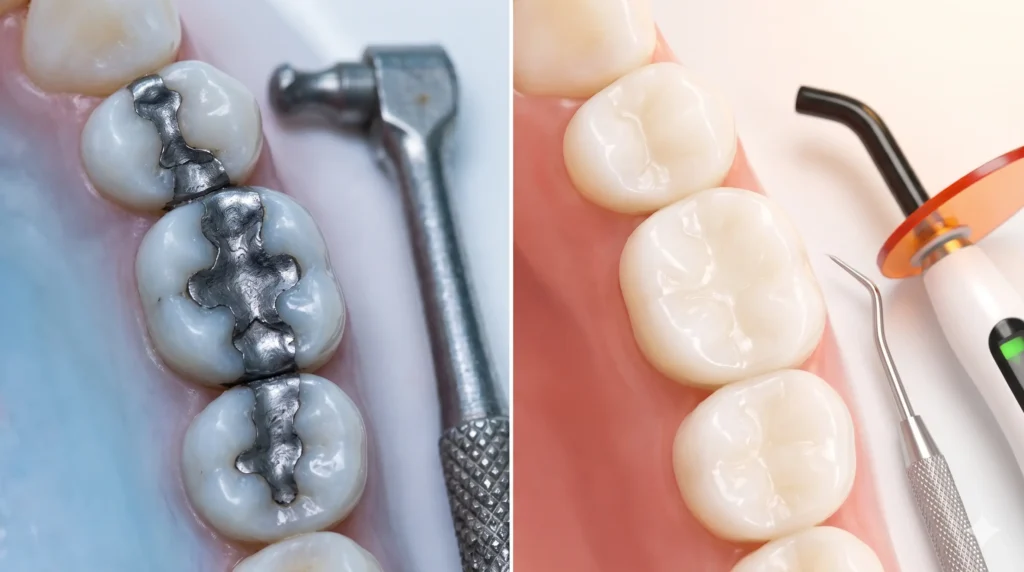
If you have old silver fillings, you may have wondered whether it is time to replace them with newer, tooth-colored restorations. Many patients today prefer composite fillings because they blend naturally with the smile, bond directly to the tooth, and can often preserve more natural tooth structure.
For patients searching for composite fillings Plainfield IL, the goal is usually simple: restore the tooth in a way that looks natural, feels comfortable, and supports long-term dental health.
Silver fillings, also known as amalgam fillings, have been used in dentistry for many years. They are strong and durable, but they are also highly visible and may not match the appearance patients want today. Tooth-colored composite fillings offer a more modern option for repairing cavities, replacing damaged fillings, and improving the look of existing dental work.
Quick Answer: Should I Replace My Silver Fillings?
You do not always need to replace old silver fillings just because they are silver. If an amalgam filling is still sealed, stable, comfortable, and free of decay, your dentist may recommend monitoring it.
However, replacement may be recommended if the filling is cracked, leaking, loose, worn down, causing sensitivity, or surrounded by new decay. Some patients also choose to replace silver fillings with white fillings for cosmetic reasons, especially when the fillings show when they smile or talk.
The best way to know is to have a dentist examine the filling and take X-rays when needed.
Composite vs. Amalgam Fillings: Quick Comparison
| Feature | Composite Fillings | Amalgam Fillings |
| Appearance | Tooth-colored and natural-looking | Silver/gray and more visible |
| Material | Resin with glass filler | Metal mixture including mercury, silver, tin, copper, and other metals |
| Bonding | Bonds directly to tooth structure | Mechanically held in place |
| Tooth Preparation | Often allows more conservative preparation | May require more shaping for retention |
| Durability | Strong for many small to medium restorations | Very durable, especially for larger back teeth |
| Cost | Often higher than amalgam | Often lower upfront cost |
| Best For | Visible teeth, cosmetic areas, smaller to medium cavities | High-pressure chewing areas, larger restorations in some cases |
The Problem with Old Silver Fillings
Old silver fillings can last for many years, but they do not last forever. Over time, fillings can wear down, crack, pull away from the tooth, or allow bacteria to collect around the edges. When that happens, decay can form underneath or around the restoration.
Some patients also notice that old amalgam fillings make the smile look darker or less natural. This is especially common when silver fillings are placed in teeth that show during talking, laughing, or smiling.
Common reasons to evaluate old silver fillings include:
Tooth sensitivity
Cracks in the filling
Dark lines around the restoration
A filling that feels loose or rough
Pain when biting
Food getting caught around the filling
Visible wear or breakdown
New decay around the filling
If you are researching replace silver fillings with white fillings, the most important step is not simply replacing every old filling. The first step is determining whether the filling is healthy, failing, or cosmetically undesirable.
What Are Tooth-Colored Composite Fillings?
Tooth-colored fillings, also called composite fillings, are made from composite resin. This material can be shaded to closely match your natural tooth color, making it a popular choice for patients who want a more natural-looking restoration.
Composite resin is placed directly into the prepared tooth, shaped by the dentist, hardened with a curing light, and polished so it blends with the surrounding enamel. Because the material bonds to the tooth, it can be a conservative option in many cases.
Patients often choose composite fillings Plainfield IL when they want to repair a cavity or replace an old filling without the dark metal appearance of amalgam.
Benefits of Upgrading to Composite Resin
Composite fillings offer several benefits, especially for patients who care about appearance and natural-looking dental work.
The main benefits include:
Natural tooth-colored appearance
Ability to match surrounding enamel
Strong bonding to the tooth
Good option for visible areas of the smile
No silver or gray metal appearance
Useful for repairing small chips or worn areas
Often allows conservative tooth preparation
Composite fillings are especially helpful for front teeth, premolars, and other visible areas where appearance matters. They can also be used in back teeth depending on the size of the cavity, bite pressure, and the dentist’s recommendation.
Composite vs. Amalgam Fillings: Pros and Cons
When comparing composite vs amalgam fillings pros and cons, there is no single answer that fits every patient.
Composite fillings look better cosmetically and bond directly to the tooth. They are often preferred when the filling will be visible. However, they may cost more than amalgam and may not always be the best choice for very large restorations or areas with heavy chewing pressure.
Amalgam fillings are strong and have a long history of use. They may be useful in certain back teeth where durability is the main concern. However, they are more noticeable and do not match the natural color of teeth.
Your dentist can help you choose the best material based on the tooth location, cavity size, bite force, cosmetic goals, and overall oral health.
Do I Really Need to Replace My Old Fillings?
Not always. Old silver fillings do not automatically need replacement. In fact, removing a stable filling without a dental reason may remove healthy tooth structure unnecessarily.
You may need replacement if your dentist finds:
Decay around or under the filling
A cracked or broken filling
A cracked tooth around the filling
Open margins where bacteria can enter
Pain or sensitivity linked to the restoration
A filling that no longer supports the tooth properly
Some patients also choose replacement for cosmetic reasons. In that case, the dentist should explain the benefits, risks, cost, and whether the tooth is a good candidate for composite resin.
Tooth-Colored Fillings Cost
The tooth colored fillings cost can vary depending on the size of the cavity, the number of tooth surfaces involved, the location of the tooth, the dental office, and whether insurance benefits apply.
A small filling on one surface usually costs less than a larger filling that covers multiple surfaces. Replacing an old silver filling may also cost more if there is decay, cracking, or additional tooth damage underneath.
The best way to get an accurate cost is to schedule an exam and have the tooth evaluated.
Safe Filling Replacement in Plainfield
If you are considering replacing old silver fillings, it is important to choose a dental office that takes a careful, conservative approach. Safe filling replacement should focus on protecting the tooth, removing only what needs to be removed, and restoring the tooth with the right material.
During your visit, your dentist may examine the filling, check your bite, take X-rays, and discuss whether replacement is necessary or optional.
For patients looking for composite fillings Plainfield IL, a personalized evaluation can help determine whether tooth-colored fillings are the right choice for your smile.
Final Thoughts
Silver fillings and tooth-colored fillings both have a place in dentistry. Amalgam fillings are durable and long-lasting, while composite fillings offer a natural appearance and modern bonding advantages.
If your old silver fillings are damaged, leaking, painful, or affecting the appearance of your smile, replacing them with composite resin may be a smart option. If they are healthy and functioning well, your dentist may recommend simply monitoring them.
The best choice starts with a professional exam and a clear conversation about your goals, dental health, and budget.
FAQs About Composite and Silver Fillings
Are composite fillings better than silver fillings?
Composite fillings are better for natural appearance and cosmetic areas. Silver amalgam fillings may still be durable for some back teeth. The better option depends on the tooth and the size of the restoration.
Can I replace silver fillings with white fillings?
Yes, many patients can replace silver fillings with white composite fillings. Replacement is usually recommended when the old filling is damaged, leaking, surrounded by decay, or cosmetically concerning.
Do old silver fillings need to be removed?
Not always. If a silver filling is stable and healthy, it may not need to be removed. Your dentist can evaluate whether replacement is necessary.
How long do composite fillings last?
Composite fillings can last for many years with proper care. Their lifespan depends on oral hygiene, bite pressure, tooth location, filling size, and regular dental visits.
How much do tooth-colored fillings cost?
Tooth-colored fillings cost varies based on the size and location of the filling, the number of surfaces treated, and insurance coverage. An exam is needed for an accurate estimate.